
Nepal's major Hindu pilgrimage sites are spread from the Kathmandu Valley to Taplejung near the Sikkim border, and no single road links them in a sensible order. The workable approach is to split them into five routes: a Kathmandu Valley circuit of two to three days, a seven-day loop through Manakamana, Devghat, Pokhara and Muktinath, a western leg to Ridi and Swargadwari, an eastern circuit through Janakpur, Dharan and Halesi, and three high-altitude add-ons at Gosaikunda, Kalinchowk and Pathibhara. Together they cover 21 sites, including all four dhams that the Government of Nepal names as the main ones: Pashupat, Ruru, Mukti and Baraha Kshetra. Most pilgrims take one or two routes per trip, not all five. Lumbini, the Buddha's birthplace, is not a Hindu site and is not counted in the 21, but it sits on the same western roads and gets its own highlight below.
| Route | Sites | Suggested length | Vehicles to ask about |
|---|---|---|---|
| A. Kathmandu Valley | Guhyeshwari, Pashupatinath, Budhanilkantha, Changu Narayan, Doleshwor, Dakshinkali | 2 to 3 days | Hyundai Venue, Hiace |
| B. Gandaki and Mustang | Manakamana, Devghat, Bindhyabasini, Tal Barahi, Muktinath | About 7 days | Hiace to Pokhara, Hilux or Land Cruiser for Mustang |
| C. Western hills | Ridi, Swargadwari | About a week | Hiace, Land Cruiser |
| D. East and Terai | Janakpur, Barahakshetra, Dantakali, Pindeshwar, Halesi | About 8 days | Hiace, Hilux or Land Cruiser for Halesi |
| E. High-altitude add-ons | Gosaikunda, Kalinchowk, Pathibhara | 2 to 7 days each | Hilux, Land Cruiser, Bolero Jeep |
Routes A and B have packages and services already listed on our site. Routes C, D and E are planned as custom trips, so send us your dates and group size and we will price them with you. The suggested lengths are planning figures for a comfortable pace, and we confirm each leg's drive time once the dates are fixed, because hill roads change with the season.
All six sites sit within about 25 kilometres of central Kathmandu, so this route depends more on comfort than on road conditions. A sensible split puts Guhyeshwari, Pashupatinath and Budhanilkantha on the first day, then Changu Narayan and Doleshwor, both in Bhaktapur district, on the second. Dakshinkali works better as its own half day, for reasons covered in the calendar section below.
A Hyundai Venue or the Hyundai car suits a couple or a small family. A Hiace is the better choice for a joint family travelling with elderly relatives and luggage. Our Kathmandu Valley sightseeing tour with guide covers the heritage side of the valley, and the Dakshinkali and Chandragiri cable car day tour is already packaged. If you arrive by air, book the airport transfer so the first temple visit does not start with a taxi negotiation.
Guhyeshwari stands on the southern bank of the Bagmati, about a kilometre from Pashupatinath. Hindu tradition counts it among the Shakti Peeths, the places where parts of Sati's body are said to have fallen while Shiva carried her across the world. Every other Shakti Peeth on this list follows the same story. Pilgrims customarily visit Guhyeshwari before they go on to Pashupatinath, and Vajrayana Buddhists also hold it sacred.
Pashupatinath is the temple of Shiva as Pashupati, on the Bagmati in Ward 8 of Kathmandu Metropolitan City. The city's heritage page gives the complex as 240 hectares and says it has been a UNESCO World Heritage Site since 1979. It adds that Shaiva, Shakta, Vaishnava, Buddhist, Jain and Sikh traditions all have shrines in the area. The government set up the Pashupati Area Development Trust in 1986 to manage it, and the trust's website carries the current darshan rules and timings. If you want a Rudravishek performed, ask about our Pashupatinath Temple Darsan with Rudravishek service.
At the foot of Shivapuri Hill, on the northern edge of the valley, a reclining Vishnu about five metres long lies in a tank of water. The figure is carved from a single block of black basalt and rests on the coils of the serpent Shesha. The shrine is open-air, unlike the pagoda temples elsewhere in the valley. It sits roughly ten kilometres from the centre of Kathmandu, so it fits easily into a morning.
Changu Narayan is a Vishnu temple on a hilltop in Bhaktapur district, usually described as the oldest surviving temple in Nepal, with origins in the fourth century. The compound holds a stone inscription dated 464 CE, set up by the Licchavi king Manadeva and generally cited as the oldest in the country. UNESCO inscribed the temple in 1979 as part of the Kathmandu Valley listing. The 2015 earthquake damaged the complex. The inner shrine's metal doors open only for rituals, and only Hindus may enter.
Doleshwor is in Sipadol, Bhaktapur, about 20 kilometres from central Kathmandu. Tradition holds that this is the head of Shiva's Kedarnath form, with the body at Kedarnath in Uttarakhand, India, and priests from Kedarnath are reported to have acknowledged the link in 2009. It is a quiet temple among farmland and Newar villages, which makes it a calm second stop after Changu Narayan.
Dakshinkali is a major Kali temple about 22 kilometres south-west of Kathmandu, set in a wooded gorge near the village of Pharping. The main image is a black stone, six-armed Kali standing on the figure of Shiva. Non-Hindus cannot enter the temple building. Pharping, a short distance away, is also a Tibetan Buddhist pilgrimage site because of its caves associated with Padmasambhava, so the two combine well into a half day.
This is the route with the most packaged support. The 5N/6D Kathmandu to Muktinath tour and the shorter 2N/3D Pokhara to Muktinath and Mustang tour cover the Pokhara to Muktinath section. Manakamana and Devghat go in front of them. Manakamana's cable car station is at Kurintar on the Prithvi Highway, and our Kathmandu to Pokhara guide describes that road, so it is not repeated here. Devghat is the awkward one. It lies off the highway near Bharatpur, so it adds a night in Chitwan, and our Kathmandu to Chitwan car rental covers that leg.
The highway is paved, so a Hiace or Venue is enough as far as Pokhara. Once the road turns up the Kali Gandaki, switch to something sturdier: the Muktinath package lists the Toyota Hilux and the Land Cruiser, and our post on which vehicle to hire for Muktinath explains why. If the Pokhara to Jomsom leg is better done by air, the domestic flight ticket service books it. For the full Mustang circuit beyond the temple, see the Mustang tour by jeep.
Manakamana is a temple of the goddess Bhagwati in Gorkha district. The name joins mana (heart) and kamana (wish), and the shrine has a reputation for granting wishes. Local tradition dates its founding to 1678. A cable car from Kurintar opened in November 1998 and covers 2.8 kilometres in roughly ten minutes, climbing from about 258 metres to about 1,302 metres. Our Manakamana Darshan cable car day tour is the packaged version if you only have a day.
Devghat is the tri-junction of Chitwan, Tanahun and Nawalparasi East districts. The Kali Gandaki, which rises at Damodar Kunda, meets the Trishuli, which flows down from Gosaikunda, and the combined river continues as the Narayani. Muktinath and Gosaikunda, both on this list, feed the two rivers. The sacred area covers about 543 hectares. The local development committee, working with Bharatpur Metropolitan City and two neighbouring municipalities, has been running a campaign to make the site plastic-free, so bring cloth bags and steel bottles.
Bindhyabasini is a hilltop temple of the goddess Durga, worshipped here as Bhagwati, about four kilometres north of central Pokhara and described as one of the oldest temples in Pokhara. Both Hindus and Buddhists visit. A lift has been built inside the compound for elderly and mobility-impaired visitors, which makes this one of the easier temples on the whole list for older pilgrims. Our Pokhara tour service and Pokhara one-day tour can include it.
Tal Barahi is a two-storey pagoda temple on a small island in Phewa Lake, reached only by boat. It is dedicated to Barahi, a boar-headed form of Durga, and Nepali sources describe it as the only temple of its kind in the country built wholly inside a lake with no land access. Pair it with Bindhyabasini on the same Pokhara day.
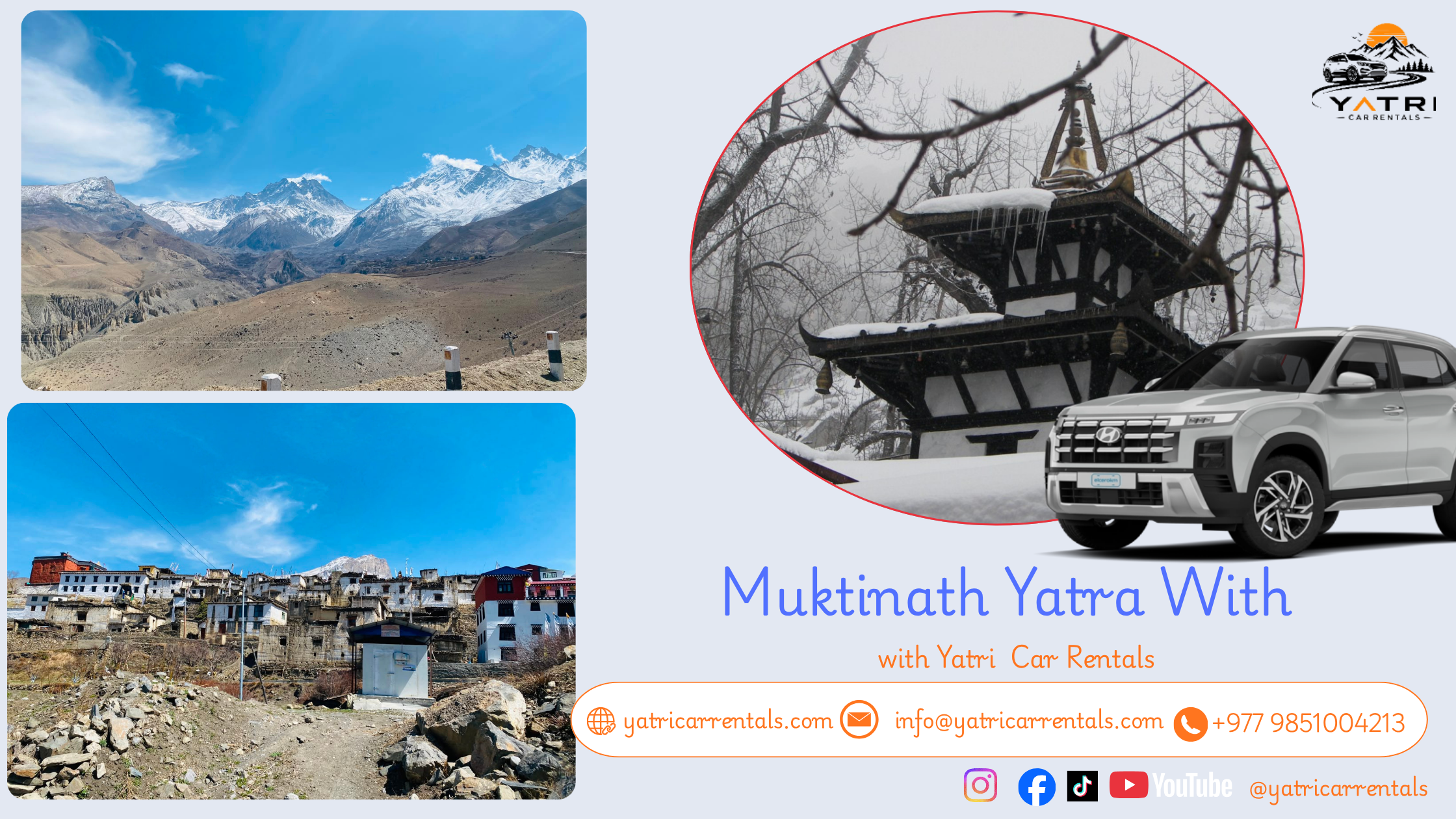
Muktinath is the Mukti dham of the government's list of four, sacred to Hindus and Buddhists, at about 3,800 metres in Mustang. Our guide to the Muktinath yatra for older pilgrims covers the route, the Jomsom flight and the altitude in detail, so none of that is repeated here. Read it before you fix a date.
Ridi and Swargadwari can each be done as a four-day trip from Kathmandu, but both are reached from the Mahendra Highway in the west, so a week covers the pair without much backtracking. Lumbini lies close to this corridor, so the extension described above fits at either end. Ask for a Hiace if the group is large, or a Land Cruiser for the last stretch to Swargadwari.
Ridi lies where the Ridi Khola meets the Kali Gandaki, at the point where Gulmi, Palpa and Syangja districts touch. Its Rishikesh Temple is dedicated to Vishnu, and shaligram stones are found on the riverbank. Nepal placed the Rishikesh Complex of Ruru Kshetra on its UNESCO tentative list in 2008. The usual approaches are through Tansen and Butwal, and the nearest large towns are Tansen and Tamghas.
Swargadwari, "the gateway to heaven", is a hilltop pilgrimage site in Pyuthan district at about 2,121 metres. It grew up around a cow-herding saint known as Swargadwari Mahaprabhu, and a sacred fire there has reportedly burned without a break. Nepal's tourism inventory lists it as a cultural and historic heritage site. Most visitors drive through Bhalubang and Ghorahi to the Bhingri base, then cover the last 13 kilometres by jeep or on foot. Ghorahi is a common overnight stop beforehand.
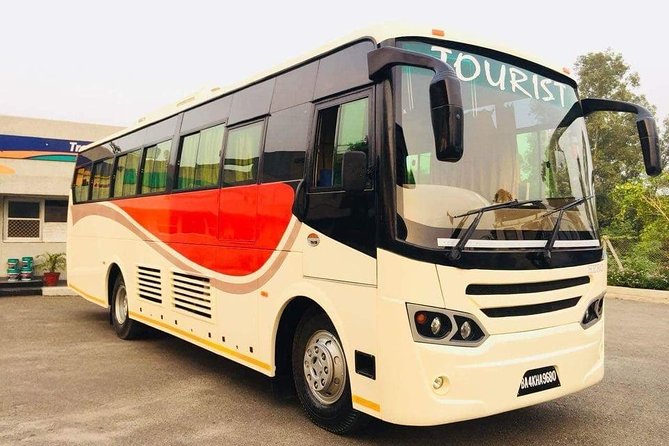
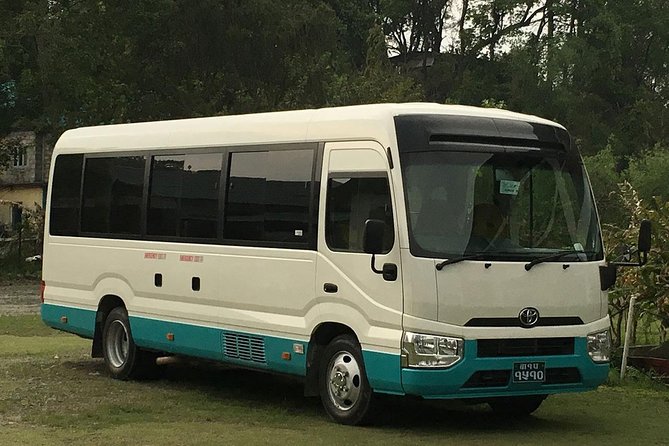
The east is the longest route on this list. The Kathmandu Post puts Kathmandu to Dharan at around nine hours by road via the BP Highway. Halesi is a separate leg: the Government of Nepal's Film Development Board lists it at 216 kilometres from Kathmandu, about ten hours by car or jeep. Plan Halesi as its own two-day leg before or after the Janakpur and Dharan section, not as a detour. For the hill road to Halesi, particularly in the monsoon, the sturdier vehicles on our fleet page, such as the Hilux and Land Cruiser, are the safer pick. A Hiace or Venue handles the Terai highways. Larger groups should look at the Coaster or Deluxe Bus.
Janakpur, in Dhanusha district, is the city of Sita and the old capital of Mithila. The Janaki Mandir is a three-storey temple with 60 rooms, which the Nepal Embassy's page calls the largest temple in Nepal. The Vivah Mandap in its south-west corner marks the spot where Ram and Sita are said to have married. Ram Mandir is a ten-minute walk away, near the holy ponds of Dhanush Sagar and Ganga Sagar.
Barahakshetra sits at the confluence of the Koka and Koshi rivers in Sunsari district, and the main temple is dedicated to Varaha, Vishnu's boar avatar. The Film Development Board places it 24 kilometres from Dharan, about 45 minutes by local transport. The same page records Kumbh Mela gatherings in 2002 and on 31 March 2014. The nearby settlement of Chatara is described there as an ancient Haridwar. Dharan makes the practical overnight base for this site and the two below.
Dantakali is a Shakti Peeth on Bijayapur hill above Dharan, said to mark where Sati's tooth fell, which is where the name comes from (danta means tooth). The temple was a pagoda until the 1934 earthquake brought it down, and a later gumbaj-style roof fell in the 1988 earthquake. Views over Dharan and the plains are a bonus on a clear day.
Pindeshwar is a Shiva temple on the same Bijayapur hill, roughly a kilometre from Dantakali. The Film Development Board notes that pilgrims first offer the waters of the Koka and Koshi at Baraha Kshetra and then go on to Pindeshwor, which links Barahakshetra, Pindeshwar and Dantakali into one circuit from Dharan.
Halesi is a cave temple in Khotang district, between the Dudh Koshi and Sun Koshi rivers, holy to Hindus, Buddhists and the Kirati people. Hindus come to worship a Shiva linga about two feet tall, and the site is often called the Pashupatinath of eastern Nepal. The first cave holds Haleshwor Mahadev, a second is known as Basaha cave, and a third is associated with Bhairava. The main cave sits about 67 feet below the surface. Buddhists believe Padmasambhava attained long life after meditating here, and the Maratika Takten Chholing Monastery stands nearby. If the road is too much, the Film Board also lists a 30-minute flight to Lamidanda, followed by about 20 kilometres in a jeep.
Gosaikunda, Kalinchowk and Pathibhara all sit above 3,700 metres, and Gosaikunda is well above 4,000, so each calls for the same slow acclimatisation as Muktinath. Our seasonal guide to mountain road trips explains when the roads are most reliable. Any of these can be added to a Valley or Pokhara trip as a separate excursion. Ask for the Land Cruiser, the Toyota Hilux or the Bolero Jeep, and check the road with the team before you commit.
Gosaikunda is an alpine lake at 4,380 metres in Langtang National Park, Rasuwa district, and it became a Ramsar wetland site in 2007. The Film Development Board lists 108 lakes in the area, of which Saraswati, Bhairab, Surya, Naga and Gosi Kunda are the best known. The drive is 127 kilometres to Dhunche via Chandragiri, about five hours by car or jeep, followed by two days on foot. The same page puts the best season at mid-August to mid-November and notes the lake stays frozen for about half the year.
Kalinchowk Bhagwati temple stands at about 3,842 metres in Dolakha district. Local guides give the road distance as 132 kilometres from Kathmandu to Charikot, then 18 kilometres of rough road to Kuri village. From Kuri you can walk for around an hour and a half or take the cable car, which takes about five minutes. Because of the cable car, Kalinchowk is the easiest of the three high-altitude sites for those who cannot manage a long climb. The hill is often snow-covered in winter.
Pathibhara is a Shakti Peeth in Taplejung district, near the Kanchenjunga region. Published elevations range from about 3,750 to 3,794 metres, so plan around the higher figure. Hindus and Buddhists both worship here, and the goddess has a reputation for granting wishes. Offerings include gold and silver, and animal sacrifice also takes place. Trail guides put the walk from Kafle Pati at three to four hours. It is the farthest site on this list, so give it a full trip of its own and ask about the road conditions before you set out.
Most pilgrimage sites become far busier on specific dates, and vehicles get booked early around them.
| When | Where it matters |
|---|---|
| Every Tuesday and Saturday | Dakshinkali. Worshippers bring animals on these days, and Saturday is the busiest. Choose another day for a quieter visit. |
| Haribodhini Ekadashi, October to November | Budhanilkantha, where a large fair marks the end of Vishnu's four-month sleep |
| Dashain, autumn | Pathibhara and Dantakali, both of which see large crowds |
| Vivah Panchami, November or December | Janakpur, where the wedding of Ram and Sita is re-enacted. The Nepal Tourism Board lists the festival |
| Maghe Sankranti, mid-January | Devghat, Ridi and Barahakshetra, all river-confluence sites with large bathing fairs |
| Shravan and Maha Shivaratri | Pindeshwar, with an August fair at the same site |
| August full moon (Janai Purnima) | Gosaikunda, where pilgrims bathe and collect holy water |
| Buddha Purnima, Shivaratri and Ram Navami | Halesi, among the fair days the Film Board lists |
Some details differ from one temple to the next. At Changu Narayan and Dakshinkali, only Hindus may enter the inner shrine or temple building. Animal offerings are part of worship at Dakshinkali, Pathibhara and Bindhyabasini, so check the day before you bring children or anyone sensitive to it. Remove shoes at temple entrances, and ask the driver where the walking starts.
Large yatra groups usually do better with a Coaster or Deluxe Bus than with several smaller vehicles. Our post on how to split the cost of a Hiace or Coaster for a group covers the maths. Seating differs by vehicle, so check each listing on the fleet page against your group size. Fuel, driver allowance and tolls are billed separately from the base rate, and the NTVA rate page shows the structure we follow. If your group includes first-time Himalayan road travellers, share our note on first-time mistakes on Himalayan roads before the trip.
For larger families, our Family Holidays Tour in Nepal is the place to start.
Can all 21 sites fit into one trip? Not comfortably. The east alone takes about eight days, and Pathibhara is a trip in itself. Pick the routes that match your calendar and add the others in a later year.
Which sites are easiest for older pilgrims? Bindhyabasini has a lift in its compound. Manakamana and Kalinchowk both have cable cars, taking about ten and five minutes respectively.
Which sites need a flight or a long walk? Halesi has a Lamidanda flight option, and Jomsom has its own flights, which the domestic flight service can book. Gosaikunda needs two days of walking from Dhunche, and Pathibhara a three to four hour walk from Kafle Pati.
Can you plan a route that is not in your packages? Yes. Send the sites you want, your dates, the group size and any mobility needs through the contact page, and the team will suggest an order and a vehicle.
Planning a pilgrimage in Nepal? Browse our tour packages, compare vehicles on the fleet page or message us on WhatsApp with your dates and group size.
Author: Sudip Regmi
Sources. Pashupati Area Development Trust (pashupati.gov.np); Kathmandu Metropolitan City heritage page for Pashupatinath; Government of Nepal Film Development Board destination pages for Halesidham, Baraha Kshetra and Gosaikunda (film.gov.np); Nepal Embassy page on Janaki Mandir; Nepal Tourism Board page on Vivah Panchami; UNESCO World Heritage tentative list entry for the Rishikesh Complex of Ruru Kshetra; The Kathmandu Post; Nepal Traveller; Yatri Car Rentals package and blog pages.
Rent sedan cars, 4WD Scorpio SUVs, HiAce vans & tourist buses with experienced drivers across Nepal.