
Short answer: A 4WD jeep or SUV. A Toyota Hilux, a Bolero Jeep, a scorpio or a Land Cruiser. Not a sedan or hatchback. Below is the detail breakdown of the routes and the reason for the vehicle to choose.
Muktinath sits at 3,710m, past Pokhara, past Jomsom, past Kagbeni. The road between Pokhara and the Muktinath temple gate changes its character four times, and that's the part most people miss when they're comparing rental prices online. A car that's fine on Kathmandu's Ring Road will struggle out here. Try it on the off-roads it was never built for, and that reasonable-looking daily rate stops looking reasonable.
Ground clearance and 4WD matter more than horsepower on this drive. A driver who's done the Kali Gandaki gorge enough times to know which bend turns bad in the rain matters even more.
Skip the map distance. It lies to you here. What matters is what the road does under the wheels.
| Stretch | Distance | Surface | What it's like |
|---|---|---|---|
| Kathmandu → Pokhara | ~200 km | Paved highway | 6–7 hours. The road climbs and switches back for most of it. |
| Pokhara → Beni | ~85 km | Paved | The easy part. Smooth, about 2–3 hours. |
| Beni → Jomsom (via Tatopani) | ~75–95 km | Mixed gravel, dirt, some paved sections | Slow going. A jeep rarely averages more than 15–20 km/h once the pavement runs out. |
| Jomsom → Kagbeni | ~11 km | Rough, partly graded | Along the Kali Gandaki riverbed. |
| Kagbeni → Muktinath | ~14–21 km | Mostly blacktopped now | The final climb. Steep, but the best-surfaced stretch of the whole trip. |
Pokhara to Jomsom alone runs 160 to 180 km, give or take, depending on which stretch of the Beni-Tatopani road is passable that season. Seven to nine hours. Split it across two days if you've got any sense. A sedan might squeeze through parts of it. Slowly. Uncomfortably. With a real chance of getting stuck once the road turns to mud or loose scree.
People try it now and then in a low-clearance car. Bad idea. Past Beni the road narrows, climbs, and swaps between gravel and dirt with zero warning about which one's coming next, and a sedan's underbody doesn't have the room to clear any of it. A flat or a stuck axle two hours past Tatopani isn't something you fix in ten minutes either. Every vehicle Yatri Car Rentals sends on this route is a genuine 4WD SUV or jeep, and that's why.
One note before the specs: these numbers come from the manufacturer, not a readout of the bluebook papers for whichever exact unit ends up on your booking. Fleet vehicles get swapped, trims shift year to year. If the numbers matter that much to you, ask your operator to confirm the specific unit.
Built since 2015, the Toyota Hilux is now in its 8th generation. There's a 2.7L (2,694cc) petrol four-cylinder at around 163 hp, or a 2.8L (2,755cc) turbo-diesel at around 201 hp, and both come with part-time 4WD and a low-range transfer case. Double-cab seats five; extra-cab, fewer. It suits the shape most Muktinath trips actually take: a long highway stretch, then a rougher hill road, then the final blacktopped climb. A small group without much luggage doesn't need anything bigger than this.
Mahindra's Bolero Jeep runs a 1.5L (1,493cc) mHawk diesel, around 75kW (100 hp), 210Nm of torque, a 5-speed manual, room for seven. This is the vehicle you actually see grinding out the Beni-Jomsom stretch day after day, driven by people who live along it. Not because it tolerates the terrain, but because it was built for it: high ground clearance, real 4WD on the relevant trims, a diesel drivetrain that doesn't strain on the climbs. Traveling as five to seven? This is the natural fit.
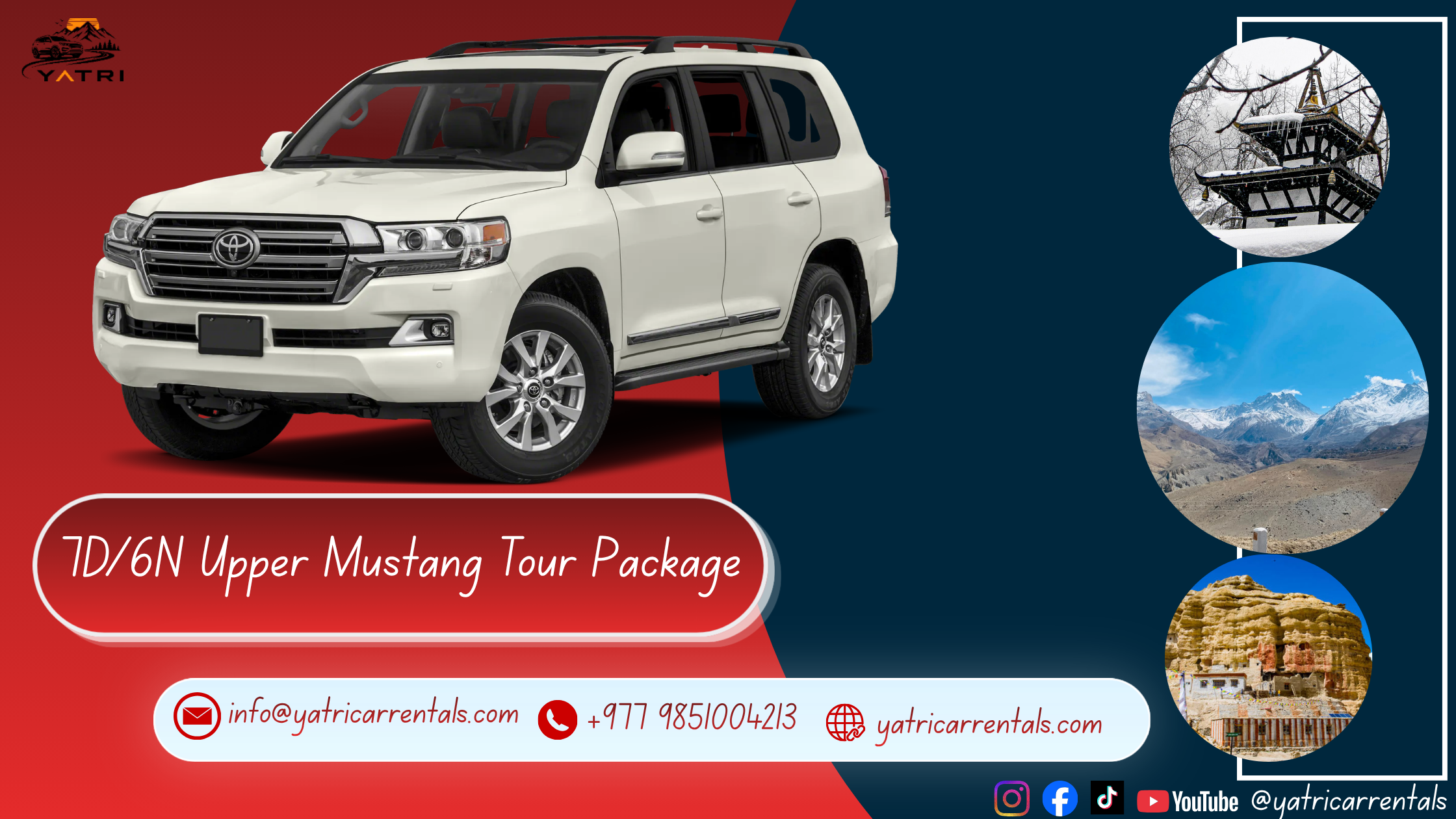
Yatri's Land Cruiser is a 70 Series, the line Toyota itself markets as built for the harshest terrain, not the softer wagons sold as Land Cruisers elsewhere. Engine depends on the unit: a long-serving 4.2L (4,164cc) 1HZ inline-six diesel, an older 4.5L (4,477cc) 1FZ-FE inline-six petrol, or a newer 4.5L (4,461cc) V8 turbo-diesel. All of them get genuine part-time 4WD, a low-range transfer case, and locking differentials, with five seats in standard wagon trim. The Hilux and Bolero handle normal conditions fine. Landslide debris after the monsoon, a bad muddy patch past Tatopani, an early snowfall near Kagbeni in the shoulder season, this is where the Land Cruiser actually earns its keep. Fixed dates, shoulder-season travel in October–November or March–April, or just wanting the steadiest possible ride on a nine-hour mountain drive: any one of those is reason enough to pay the difference.
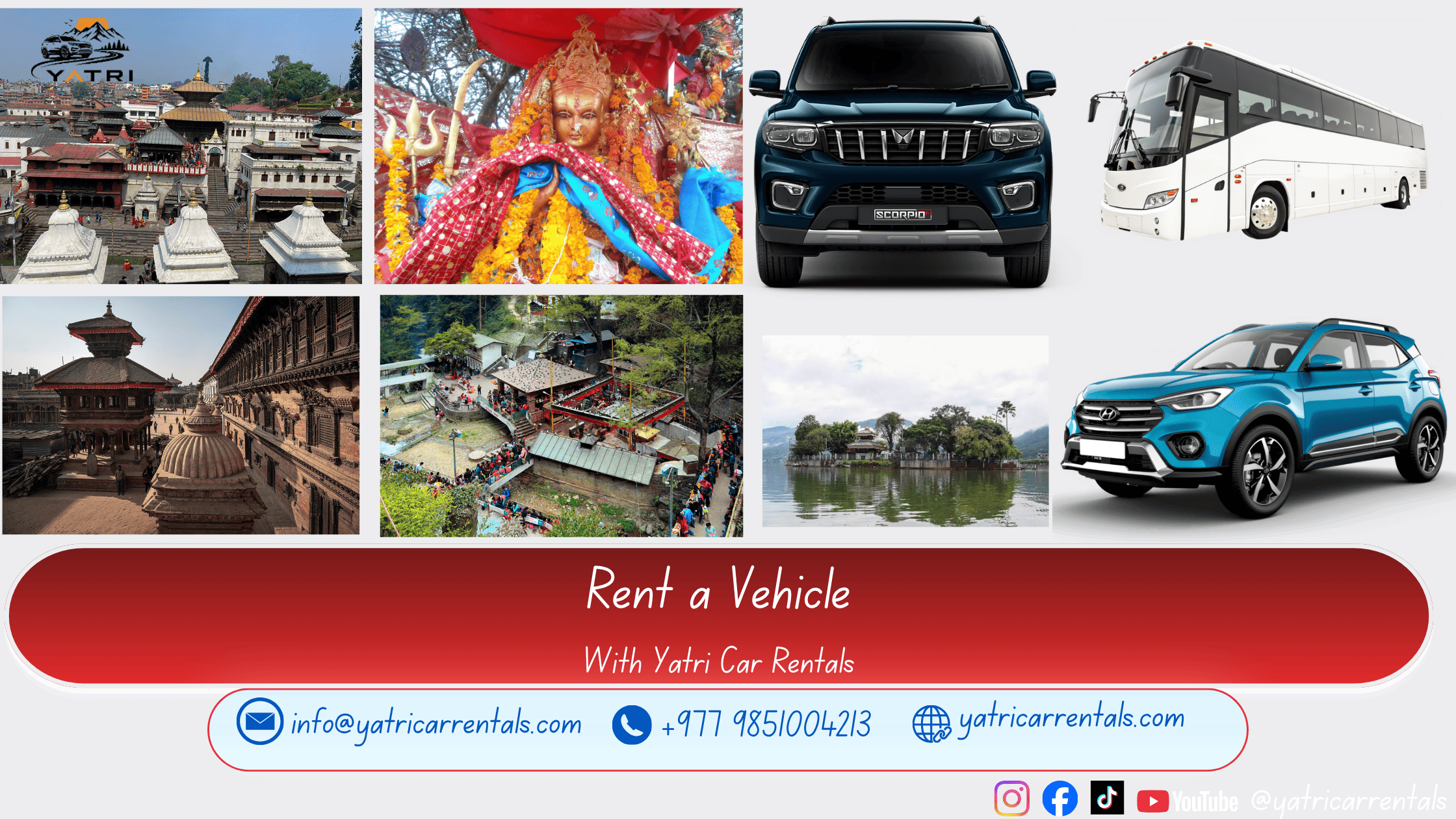
Still a common sight on Nepal's hill routes, the classic Mahindra Scorpio runs a 2.2L (2,179cc) mHawk diesel at around 120 hp, a 5-speed manual, roughly 180mm of clearance, seven seats. Close cousin of the Bolero in what it does well: real 4WD on relevant trims, built for this terrain, not adapted to it. Yatri lists it under "Van/Scorpio" on the Official NTVA Vehicle Rates page. Ask for it by name at booking if you'd rather have this than the Bolero.
Want to compare them side by side? Browse the full vehicle fleet, or check the Official NTVA Vehicle Rates for how pricing breaks down by route.
You can skip the Beni-Jomsom stretch entirely. Flights run Pokhara to Jomsom in around 20 minutes on a clear morning, landing you close enough that only the Jomsom-Kagbeni-Muktinath leg is left by road, and that happens to be the best-surfaced part of the whole trip. Catch is, these flights run mornings only, get cancelled a lot once the Kali Gandaki's afternoon winds kick in, and shouldn't sit next to a tight connection on the other end. You'll still need a vehicle waiting at Jomsom for that final leg. The 5N/6D Kathmandu To Muktinath Tour already has this flight-or-drive choice built into the itinerary. For less time on hand, the shorter 2N/3D Pokhara To Muktinath/Mustang Tour covers the same ground.
At 3,710m, Muktinath sits well past the 2,400m mark where Acute Mountain Sickness turns into a real risk. Fitness doesn't protect you from it. A jeep gets you up there in a day, far faster than any trekking itinerary. Your body doesn't get the days a trekker would have to adjust, which is the actual problem here, not the vehicle. If your plan has an overnight in Jomsom (2,700m) before the final push, look for a driver comfortable running two mountain driving days back to back rather than one racing the whole climb at once. Headache, nausea, unusual fatigue: treat any of them getting worse as a reason to descend.
Most Muktinath bookings go wrong somewhere that has nothing to do with the vehicle. Some operators advertise a low base rate, then add fuel, driver allowance, or permit fees once you've already committed. On a multi-day mountain route, those extras pile up fast.
Ask upfront whether fuel, driver fees, and permits are all in the quoted price. With Yatri, they are. No separate fuel bill, no surprise driver allowance after you've confirmed a booking, no gap between quote and what you actually pay. Muktinath and Jomsom sit inside the Annapurna Conservation Area, so the ACAP fee applies, roughly NPR 3,000, about USD 30, per foreign visitor, and it's baked into the package price rather than billed on top. The stricter Restricted Area Permit only comes into play north of Kagbeni, toward Upper Mustang and Lo Manthang. A standard Muktinath trip never crosses that line, so it's not a cost to plan around here. Going on into Upper Mustang? Our Mustang Tour By Jeep service covers that permit directly.
None of these come without a driver. Someone who already knows the Kali Gandaki route, the Jomsom flight schedule, and which stretch of the Beni road gives trouble after rain. Not a set of keys and a map.
1. What's the best vehicle for Muktinath, jeep, SUV, or car? A 4WD jeep or SUV, Toyota Hilux, Bolero Jeep, Mahindra Scorpio, or Land Cruiser. Skip a sedan or hatchback past Beni, where the road turns to gravel and dirt without warning.
2. How far is Muktinath from Pokhara by road? Roughly 160–180 km in three stages: Pokhara to Beni (~85 km, paved), Beni through Tatopani to Jomsom (~75–95 km, mixed gravel and dirt), then Jomsom via Kagbeni to Muktinath (~22–32 km, mostly blacktopped near the end).
3. Can I fly instead of driving to Muktinath? Yes, about 20 minutes, Pokhara to Jomsom. Mornings only, and cancellations are common once afternoon winds hit the gorge. You'll still need a vehicle at Jomsom for the last leg.
4. Do I need a special permit for a Muktinath trip? The Annapurna Conservation Area Permit (ACAP), roughly NPR 3,000 (about USD 30) per foreign visitor, since both Muktinath and Jomsom sit inside the conservation area. The stricter Restricted Area Permit only applies if you push north of Kagbeni into Upper Mustang.
5. Is the drive to Muktinath safe for someone with no mountain-driving experience? With an experienced local driver, yes. That's exactly why we wouldn't recommend a first-timer self-drive it. The road changes character several times, and you can't judge from a map which sections call for caution.
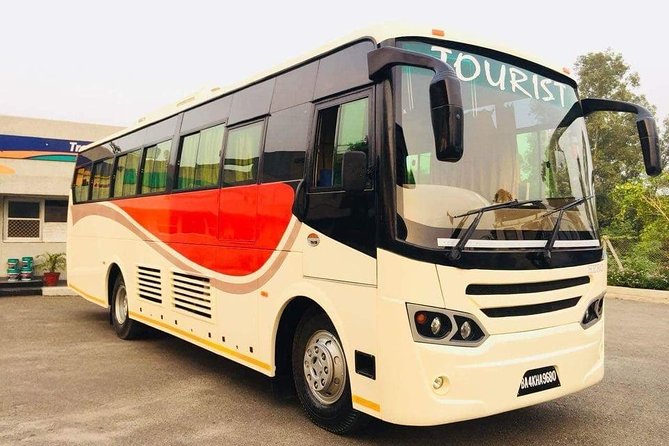
6. How many people fit comfortably for a Muktinath jeep tour? Five in a Toyota Hilux, double-cab trim. Seven in a Bolero Jeep or Scorpio. Larger groups usually split across two vehicles, or take a bigger one for the Kathmandu–Pokhara leg before switching to jeeps for the mountain stretch.
Sources: Toyota Motor Corporation; Mahindra & Mahindra; National Trust for Nature Conservation (NTNC), ACAP fee schedule (2026); Government of Nepal, Department of Roads; Yatri Car Rentals, Official NTVA Vehicle Rates.
Planning your trip to Muktinath? Browse our full vehicle fleet, check the 5N/6D Kathmandu To Muktinath Tour or the shorter 2N/3D Pokhara To Muktinath/Mustang Tour, and see how our packages are priced on the Official NTVA Vehicle Rates page. Continuing on to Lo Manthang? Our Mustang Tour By Jeep has the Upper Mustang permits built in. Questions about which vehicle fits your group? Get in touch and we'll walk you through it. Fuel, driver, and permits are already in the price. Not a penny extra once you've booked.
Author: Yatri Car Rentals
Related reading: 7 Things First-Time Visitors Get Wrong About Driving in the Himalayas and 9 Things You Should Know Before Renting a Car in Nepal.
Rent sedan cars, 4WD Scorpio SUVs, HiAce vans & tourist buses with experienced drivers across Nepal.