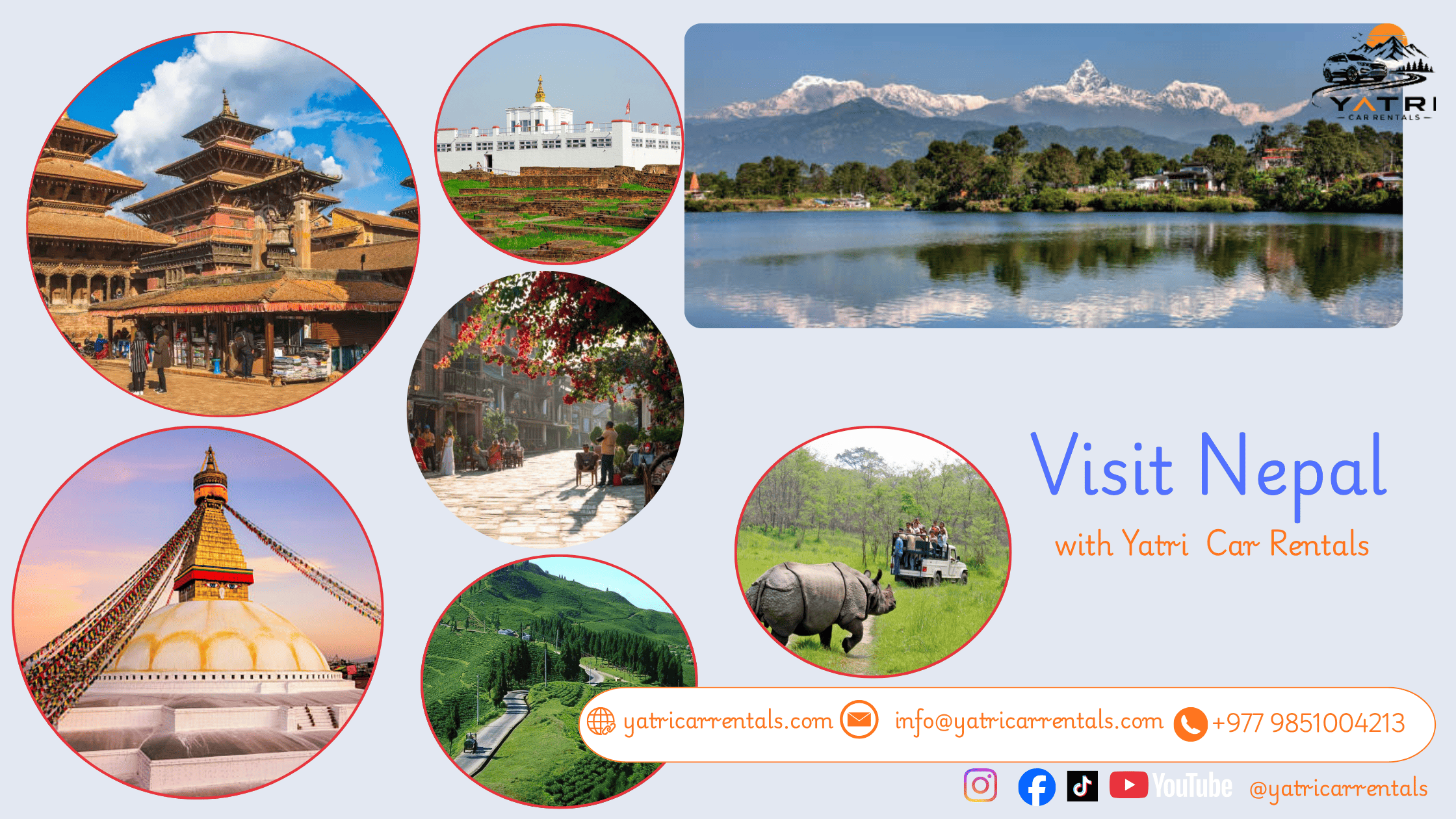
Nepal packs an unusual range into a small footprint — heritage temples a short drive from the airport, a trading town whose isolation accidentally preserved it, and a mountain that dominates the horizon from a hundred kilometres out. Kathmandu, Pokhara, Chitwan, and Lumbini cover most of what draws first-time visitors here. Everest Base Camp, Annapurna Base Camp, and Mustang cover the high-altitude side. Bhaktapur, Bandipur, Palpa, and Ilam are what you add once those aren't enough. Below is what each one actually offers, drawn from government tourism boards, conservation authorities, and credible reporting rather than the usual copy-paste travel listicle — and how the routes between them actually work.
Four monument zones make up Kathmandu's heritage core: Kathmandu Durbar Square, Swayambhunath, Boudhanath, and Pashupatinath Temple. They're part of the seven-zone Kathmandu Valley UNESCO listing, inscribed in 1979, per the Nepal Tourism Board. Pashupatinath is among the more significant Hindu temple complexes anywhere, and Boudhanath's stupa is one of the largest in South Asia. Our Kathmandu Valley Sightseeing Tour with Guide covers all four in one day, or if Pashupatinath is the priority, our Pashupatinath Temple Darsan with Rudravishek service focuses on just that visit.
Thirteen kilometres east of the capital sits the second Kathmandu Valley monument zone worth a dedicated trip: Bhaktapur Durbar Square. Ask anyone who's seen all three of the valley's durbar squares and Bhaktapur usually wins — its medieval core is largely traffic-free and walkable, which the other two can't claim anymore. Our Bhaktapur, Nagarkot Tour Service runs it as a half-day trip from Kathmandu.
"The jewel in the Himalaya" is how the Nepal Tourism Board describes Pokhara, and the geography backs the claim up: mountains above 6,000 metres sit visible and unobstructed from a city at only 800 metres, across a distance of roughly 28 km. Three lakes anchor the area — Phewa, Rupa, and Begnas — with the Annapurna range rising behind them, and Pokhara doubles as the main gateway into that range for anyone heading further in. Our Pokhara Tour Service covers the city; for the drive down from the capital, we've written a separate guide on cost and timing.
No temples here, no mountain backdrop — Chitwan runs on jungle safaris and river activities instead, which makes it the outlier on this list. It's also Nepal's oldest national park, founded in 1973 according to the Department of National Parks and Wildlife Conservation, and UNESCO added it to the World Heritage list in 1984 for its subtropical lowland ecosystem, home to one-horned rhinos and Bengal tigers. Our Chitwan National Park Tour covers the park; our Kathmandu to Chitwan route guide covers getting there.
Buddhists know Lumbini as the birthplace of Siddhartha Gautama; UNESCO knows it as Nepal's other cultural World Heritage Site, inscribed in 1997. It sits down in the Terai plains near the Indian border, which is why most itineraries pair it with Chitwan rather than treating it as its own trip. Our Lumbini Tour Service covers the sacred garden and the monastic zone around it.
Tansen doesn't pull the visitor numbers the sites above do, which is part of its appeal. The hill town's centrepiece, Rani Mahal, is a riverside palace General Khadga Shamsher built in the 1890s in memory of his wife, Tej Kumari Devi — Nepali press coverage has nicknamed it "Nepal's Taj Mahal." Tansen also carries its own Newari-style Durbar Square and hilltop views over the Kali Gandaki valley, and it sits conveniently between Pokhara and Lumbini for anyone driving that stretch rather than flying it.
Bandipur exists in its current form largely because of bad luck. Newar merchants from Bhaktapur settled the hilltop town in the 19th century along the old India-Tibet trade route, per the Kathmandu Post's reporting on the town's history — and then the Prithvi Highway bypassed it entirely in the 1970s, cutting off the trade that had built it. Losing that traffic is exactly why the Newari architecture and the car-free main bazaar are still standing rather than redeveloped. It's roughly midway between Kathmandu and Pokhara, an easy detour if you're driving that road anyway.
Nepal hasn't inscribed Mustang as a UNESCO site — but the Nepal Tourism Board does list "Jomsom & Muktinath" among the country's proposed World Heritage properties, which surprises people who assume the designation is already official. Geography does the rest of the selling: the region sits in the rain shadow behind the Annapurna-Dhaulagiri range, producing a high-desert landscape that looks almost nothing like the rest of Nepal, centred on Muktinath Temple, a pilgrimage site shared by Hindus and Buddhists. Our Mustang Tour By Jeep and Kathmandu to Muktinath package run this route, and we've covered timing a mountain trip like this one against the seasonal snow and monsoon risk.
This is the one place on the list you can't drive to. Annapurna Base Camp sits inside the Annapurna Conservation Area — 7,629 sq km, Nepal's first and largest conservation area, launched in 1986 and under National Trust for Nature Conservation (NTNC) management since 1992. Inside its boundaries: the Annapurna Sanctuary, Annapurna I at 8,091 metres, and the Kali Gandaki Gorge, among the deepest river gorges anywhere. Getting to ABC means a multi-day trek starting from the Pokhara side; our Pokhara Tour Service gets you to the trailhead, and beyond that, boots do the rest.
Sagarmatha National Park was established in 1976, covers 1,148 sq km of the Khumbu region, and joined the UNESCO list in 1979 — the same year as the Kathmandu Valley — according to DNPWC's park records. There's no road into it, so anyone not trekking the multi-day route sees Everest by mountain flight or helicopter instead. Our Everest Base Camp Helicopter Tour and Mountain Flight are both built around exactly that.
Tea, not temples, is the draw in Ilam. Commercial cultivation in this far-eastern district dates to 1920 and has since spread to dozens of others, per Online Khabar's reporting on the industry. The landscape doesn't resemble the rest of Nepal — tea estates roll across the hills around Kanyam and Fikkal, the weather stays cool year-round, and Kanchenjunga shows up on clear days. Distance is the real constraint: Ilam sits far enough east that it's better planned as its own trip than tacked onto a central-Nepal loop.
Palpa, Bandipur, and Ilam don't sit on any of our standard tour pages — they're custom routes, built through our All Nepal Tour once you tell us they're part of the plan. The other eight involve real multi-hour driving too, particularly Pokhara, Chitwan, Lumbini, and Mustang, and booking each leg separately with a different driver is usually where a Nepal itinerary starts costing more and running less smoothly than it should. A single vehicle across the whole route avoids that — the same reasoning behind our group cost-splitting guide.
Our tour packages page has several of these routes pre-built. For the rest, get in touch with your dates and we'll sequence it.
Is Mustang or Muktinath officially a UNESCO World Heritage Site? Not yet — the Nepal Tourism Board lists "Jomsom & Muktinath" among proposed sites, meaning it's been put forward, not inscribed.
Can I drive to Annapurna Base Camp? No. It's on foot only, via a multi-day trek from the Pokhara side. Everest Base Camp is the reverse case for most visitors — reached by air rather than trek.
Is Ilam worth combining with the rest of this list? Not easily. It's several hundred kilometres from the Kathmandu-Pokhara-Chitwan-Lumbini loop, in the opposite direction from everything else here.
Do Bandipur and Palpa need a dedicated day, or can they be a stopover? Most people treat them as stopovers on the Kathmandu-Pokhara or Pokhara-Lumbini drive rather than dedicated destinations — a few hours each is usually enough to see the core sights.
Sources: Nepal Tourism Board (ntb.gov.np) — UNESCO World Heritage Sites listing, Pokhara destination page; Department of National Parks and Wildlife Conservation (dnpwc.gov.np) — Chitwan National Park and Sagarmatha National Park records; National Trust for Nature Conservation (ntnc.org.np) — Annapurna Conservation Area Project records; The Kathmandu Post — reporting on Bandipur's history; Online Khabar — reporting on Ilam's tea industry and Palpa's Rani Mahal.
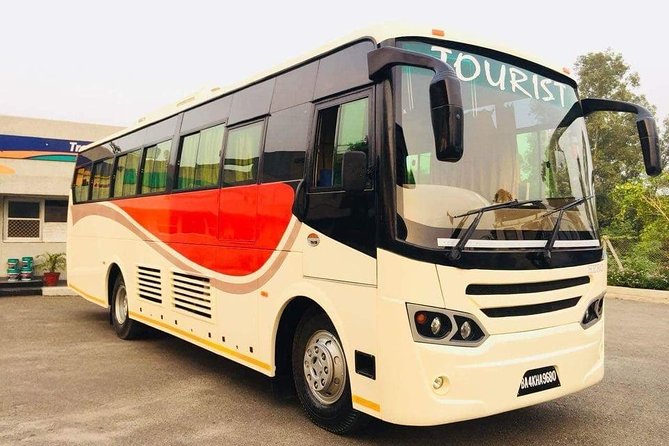
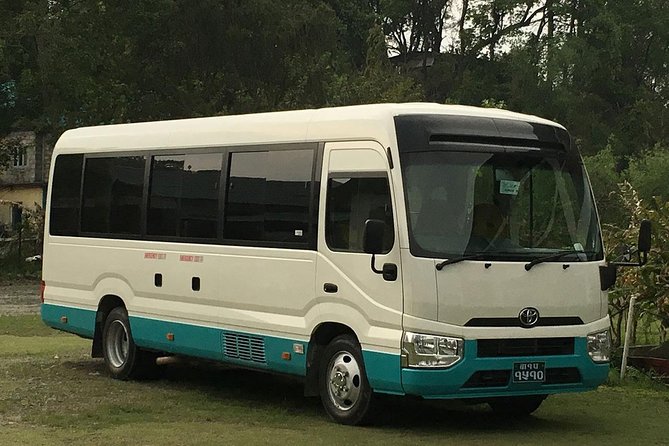
Rent sedan cars, 4WD Scorpio SUVs, HiAce vans & tourist buses with experienced drivers across Nepal.