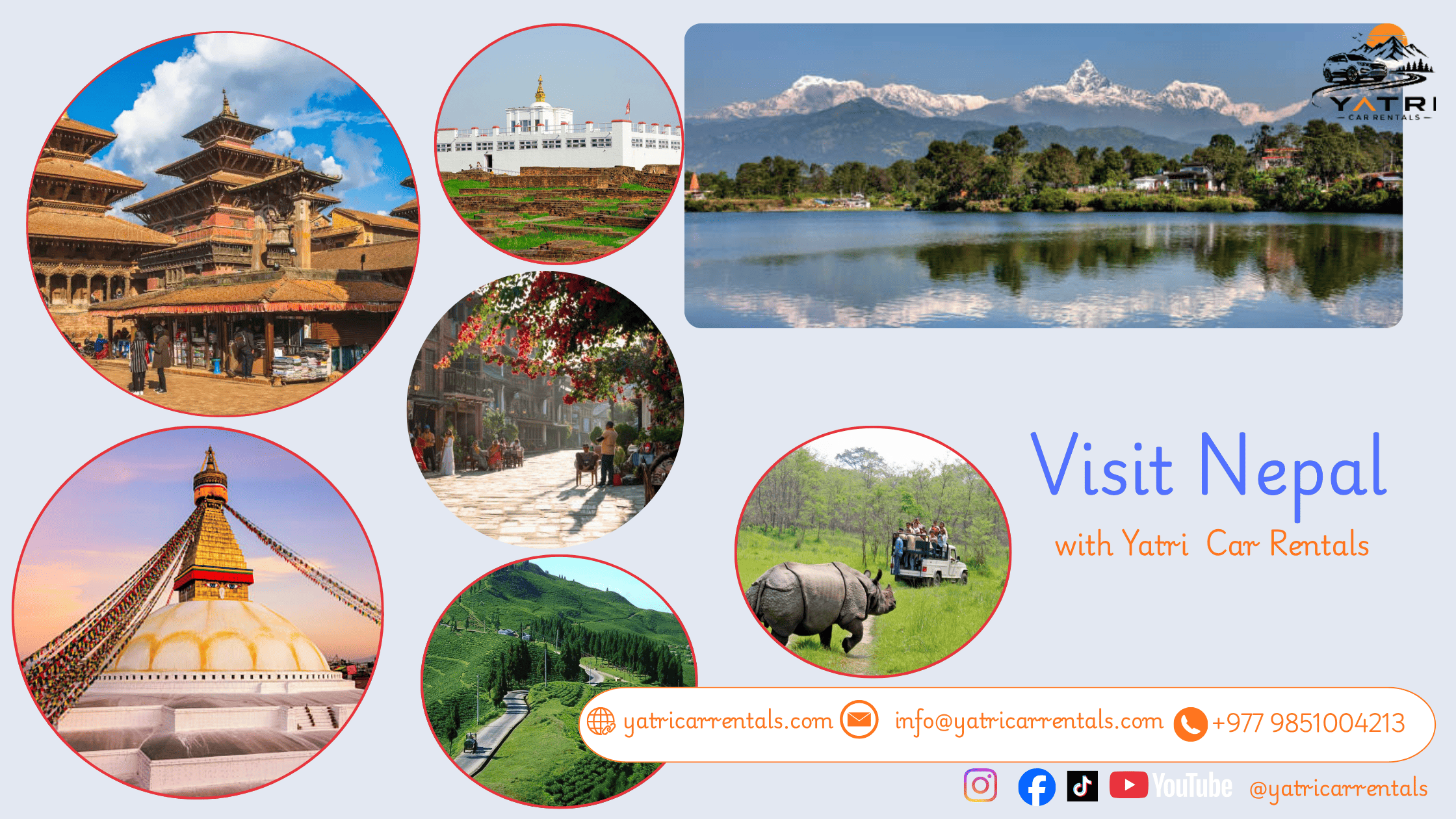
Nepal looks straightforward on a map. Kathmandu to Pokhara? Barely 200 kilometers. Chitwan? Even closer. Then you actually get on the road, and the math stops making sense — a "short drive" eats up six hours, the highway narrows to one lane around a cliff edge, and your phone loses signal exactly when you need directions most.
None of that means you shouldn't rent a car here. It means you should know what you're getting into first. Below is what actually matters, drawn from how driving and car rental work in Nepal in practice. And if you'd rather skip the guesswork entirely, you can rent with Yatri Car Rentals in Kathmandu and let an experienced local driver handle the parts most visitors find stressful.
If you're arriving from the US, Europe, or most of the Americas, this is the first adjustment your brain has to make. Traffic keeps to the left, overtaking happens on the right, and roundabouts flow in the opposite direction from what you're used to. It sounds minor until you're merging onto a busy Kathmandu road for the first time and your instincts point the wrong way.
Give yourself a slow first hour. Quiet side streets near your hotel are a far better place to recalibrate than the Ring Road at rush hour.
Foreign visitors need two documents to drive legally in Nepal: their valid driver's license from home, and an International Driving Permit (IDP). The IDP itself isn't a license — it's an official multilingual translation of the one you already have, and it's what lets local police and rental staff verify your credentials without a language barrier.
Here's the part that trips people up: you can't get an IDP once you've landed. It has to be issued in your home country before departure, usually through a national motoring association. Turn up without one, and a rental company legally cannot hand you the keys for a self-drive booking.
This is exactly why most tourists in Nepal skip self-drive entirely and book a car with a driver instead — no license or IDP required on your end, and someone who already knows which turns are sharper than they look is behind the wheel.
Google Maps will give you a number. Ignore the number.
Nepal's terrain is the reason. Outside the Kathmandu Valley, roads climb, switchback, and narrow constantly, and a stretch of highway that looks flat on a map might actually be cut into the side of a hill. A 200-kilometer trip to Pokhara routinely takes six to seven hours, not the three or four the distance would suggest anywhere flat. Plan your itinerary around driving time, not kilometers.
From roughly June through September, monsoon rains hit Nepal's hill and mountain roads hard. Landslides close sections of highway with little warning, and what was a clear route in the morning can be blocked by afternoon. It doesn't mean cancel your trip — it means build in flexibility, ask locally about current road status before a long drive, and avoid scheduling anything you can't afford to delay by a day.
Posted limits generally sit around 40 km/h in urban areas and roughly 80 km/h on open highway stretches, though actual limits vary by road and signage. In practice, road conditions — not the speedometer — will usually be what slows you down first. Seat belts are required for everyone in the vehicle, and driving under the influence of alcohol is taken seriously and best avoided entirely; don't treat Nepal's roads as more lenient just because enforcement looks informal.
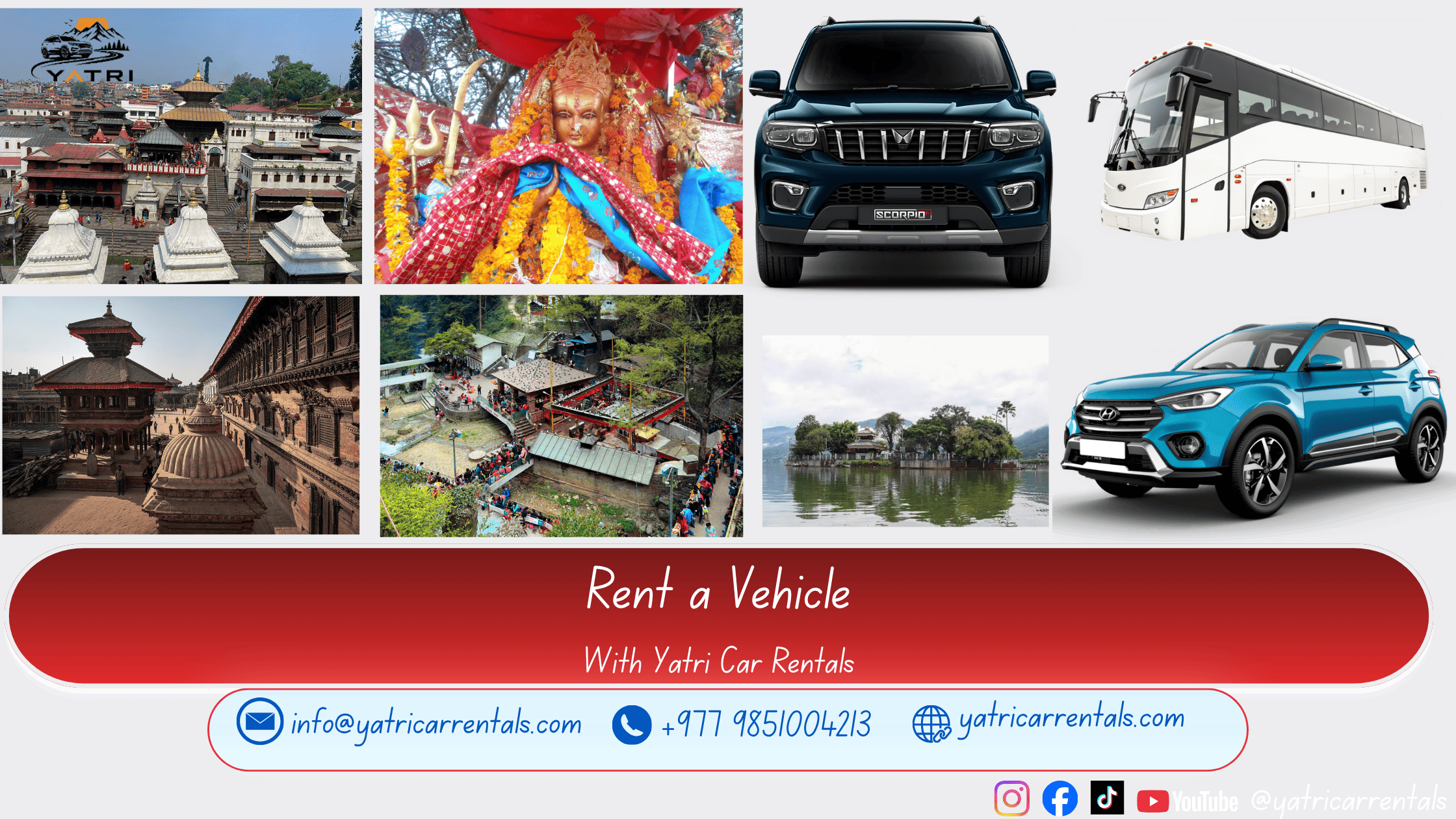
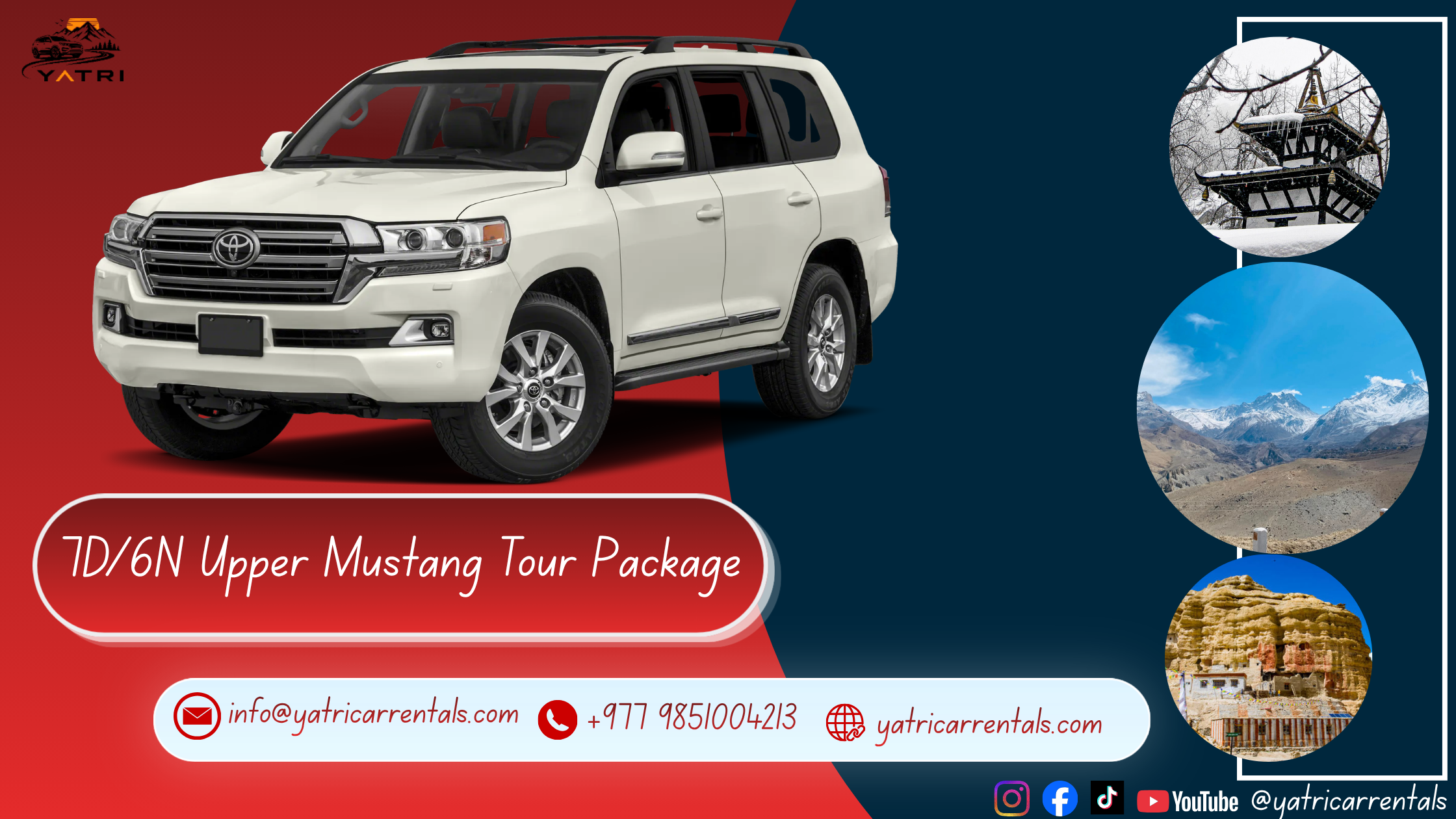
A hatchback is fine for getting around Kathmandu. It is not fine for the road to Mustang. Hill and mountain routes call for an SUV or 4WD jeep with real ground clearance — the cheapest daily rate stops looking like a bargain the moment you're grinding through a rutted, unpaved stretch in the wrong car. Match the vehicle to where you're actually going, not just to the lowest number on the page.
Rental pricing in Nepal is commonly quoted as a base daily rate, with fuel, driver allowance, and toll or parking fees added separately. That's not a red flag — it's just how the market works here — but it does mean two quotes that look identical on paper can end up very different once the extras are added. Get the full breakdown before you book, not after.
It's tempting to assume a driver is just there to steer. On Nepal's roads, that's underselling it. A driver who works these routes regularly knows which section is currently under repair, which shortcut saves an hour, and when a "scenic detour" is actually the safer option because of weather.
Sudip Regmi, CEO of Yatri Car Rentals, put it this way when asked what surprises first-time visitors most: "People plan the destination and forget to plan the road. Our drivers aren't just getting you from A to B — they're the ones who know today's road isn't the same as yesterday's, especially once the rains start."
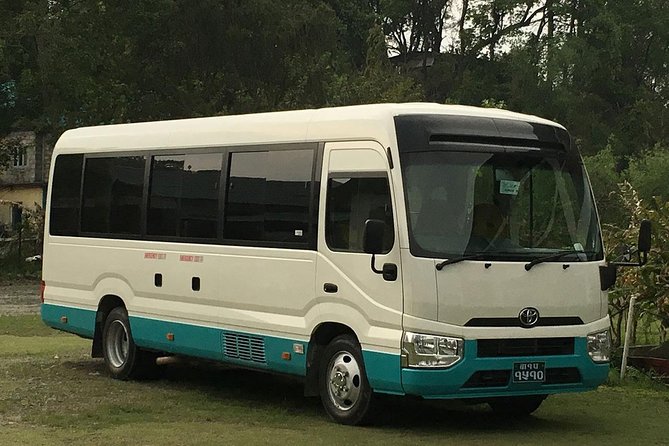
This is the whole reasoning behind booking with an established local operator instead of whatever's cheapest at the airport counter. At Yatri Car Rentals, every chauffeur-driven booking comes with an experienced driver who works these specific routes on a regular basis — not someone reading a map for the first time alongside you.
A few things set a local, Kathmandu-based operator apart from generic booking platforms:
Keep these on you, not buried in a suitcase: passport, valid Nepal tourist visa, driver's license and IDP (for self-drive), and your rental agreement. Checkpoints on highway routes are routine, particularly outside the Kathmandu Valley, and having everything on hand keeps a routine stop routine.
If you've driven in mountainous or South Asian traffic before and have your IDP sorted, self-drive gives you full control of the schedule. If this is your first time navigating left-hand traffic on unfamiliar mountain roads, a chauffeur-driven rental removes the steepest part of the learning curve and, in a lot of cases, ends up being the more relaxing choice once you factor in how much mental energy driving unfamiliar terrain actually takes.
Nepal draws a steady stream of Indian pilgrims heading to sites like Pashupatinath, Muktinath, and Manakamana, and the entry process for Indian citizens is genuinely simpler than for most other nationalities.
Under the 1950 Indo-Nepal Treaty of Peace and Friendship, Indian nationals don't need a visa to enter Nepal at all — by air or by land. What you do need is a valid original ID: a passport or a voter ID card with a photo are accepted, but an Aadhaar card is not, and photocopies or scanned copies of any document won't be accepted at the border either. Carry the physical original.
Driving is simpler too. Indian citizens can drive in Nepal using a valid Indian driving license, without needing an International Driving Permit — a genuine advantage over most other foreign visitors, who do need one. If you're bringing your own vehicle across the border rather than renting locally, you'll additionally need a temporary import permit for the vehicle, arranged at the border crossing.
That said, most Indian pilgrims still choose a chauffeur-driven rental over self-drive, and not just for convenience. Pilgrimage routes often involve early-morning starts, hill roads to places like Muktinath, and multiple stops at temples in a single day — a local driver who already knows the darshan timings and the fastest route between sites tends to make the trip considerably less tiring, especially for family groups traveling with elderly parents or young children.
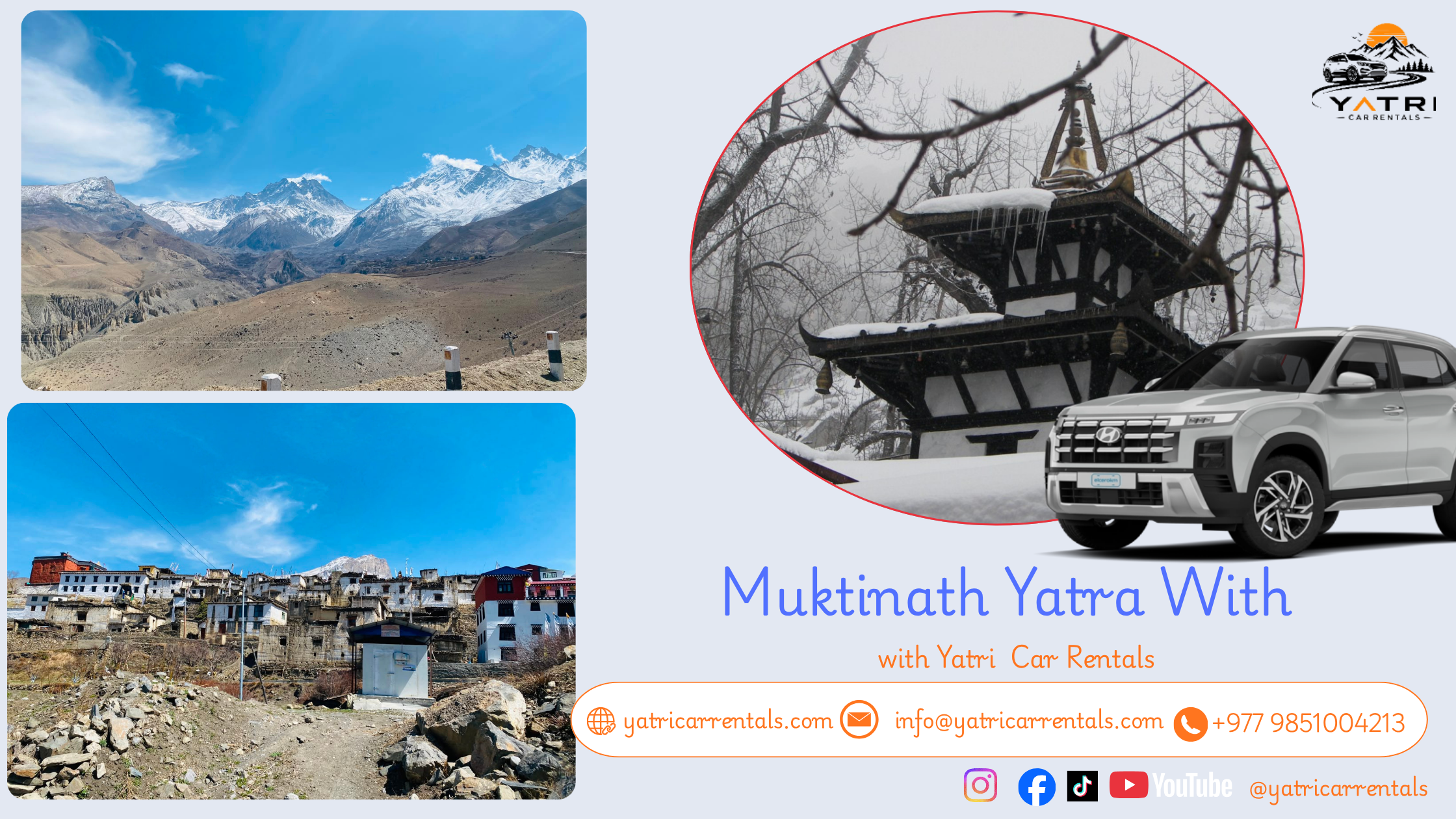
Yatri Car Rentals runs dedicated services for several of these routes, including a Pashupatinath Temple darshan with Rudravishek and a Muktinath tour, both built around pilgrimage timings rather than a generic sightseeing schedule.
Planning a road trip in Nepal? Rent a car in Kathmandu with Yatri Car Rentals and travel with an experienced local driver who knows the roads — or choose self-drive if you'd rather take the wheel yourself. Browse the full fleet or get in touch to book.
Author: Yatri Car Rentals
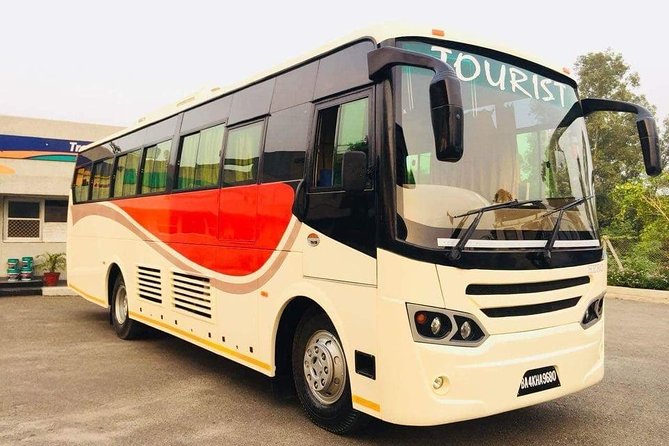
Rent sedan cars, 4WD Scorpio SUVs, HiAce vans & tourist buses with experienced drivers across Nepal.