
Most first-time visitors land in Kathmandu with a list of names and no real sense of how they fit together. Durbar Square — but which one, there are three. Swayambhunath and Boudhanath — both stupas, so is one enough? Pashupatinath — is that a temple you visit or a place you're meant to just walk past respectfully?
The confusion is understandable. The Kathmandu Valley packs seven UNESCO World Heritage Sites into an area you could drive across in under an hour, and each one represents a different slice of the valley's history — Hindu, Buddhist, royal, artisan, or all four folded into one courtyard. This guide sorts them by what they actually show you, not just where they are, with the entry fees and hours you'll need to plan around.
A quick note on entry fees before you read on: almost every site charges four different rates — free for Nepali citizens, a discounted rate for SAARC nationals (India, Bhutan, Bangladesh, Sri Lanka, Pakistan, and the Maldives), and a higher rate for everyone else, including Chinese nationals, who are usually grouped with "other foreigners" rather than SAARC. Pashupatinath is the one clear exception: Indian nationals enter free there alongside Nepalis, a status no other site on this list extends. Every fee below is broken out by these tiers.
Two to three days covers the valley's core sites comfortably without turning it into a sprint. One day for Kathmandu Durbar Square, Swayambhunath, and Thamel (they're close enough to combine). A second day for Boudhanath and Pashupatinath together, since both sit in the same northeastern part of the city. A third day, if you have it, for Bhaktapur and Changu Narayan — they're far enough out that rushing them from central Kathmandu the same afternoon as something else usually means shortchanging one or the other.
If you only have one full day, prioritize Kathmandu Durbar Square, Swayambhunath, and Boudhanath — that combination gives you royal history, hilltop Buddhist architecture, and a working monastic community in a single day without excessive backtracking.
Kathmandu Valley had three separate royal cities before it was unified in the 18th century — Kathmandu, Patan (Lalitpur), and Bhaktapur — and each built its own palace square. That's why "Durbar Square" isn't one place; it's three, and confusing them is the single most common mix-up first-time visitors make.
Kathmandu Durbar Square was the seat of the Malla and later Shah dynasties. Foreign visitors pay NPR 1,000, SAARC nationals (Indians included) pay around NPR 500, and Nepali citizens enter free; the ticket includes access to the Tribhuvan Museum inside the old Hanuman Dhoka palace. Inside the square you'll find Kumari Ghar, home to Kathmandu's Living Goddess, and the Kasthamandap — the structure the city itself is named after. Ticket checking generally runs from morning to early evening, though the square itself stays open to walk through later.
Patan Durbar Square, across the Bagmati River in Lalitpur, is widely considered the most architecturally intact of the three — it escaped some of the heavier redevelopment Kathmandu's square saw over the centuries. Foreign entry is NPR 1,000, SAARC nationals pay around NPR 250, and the ticket includes the Patan Museum, generally regarded as one of the best-curated museums in the valley for understanding Newari bronze work and religious art up close.
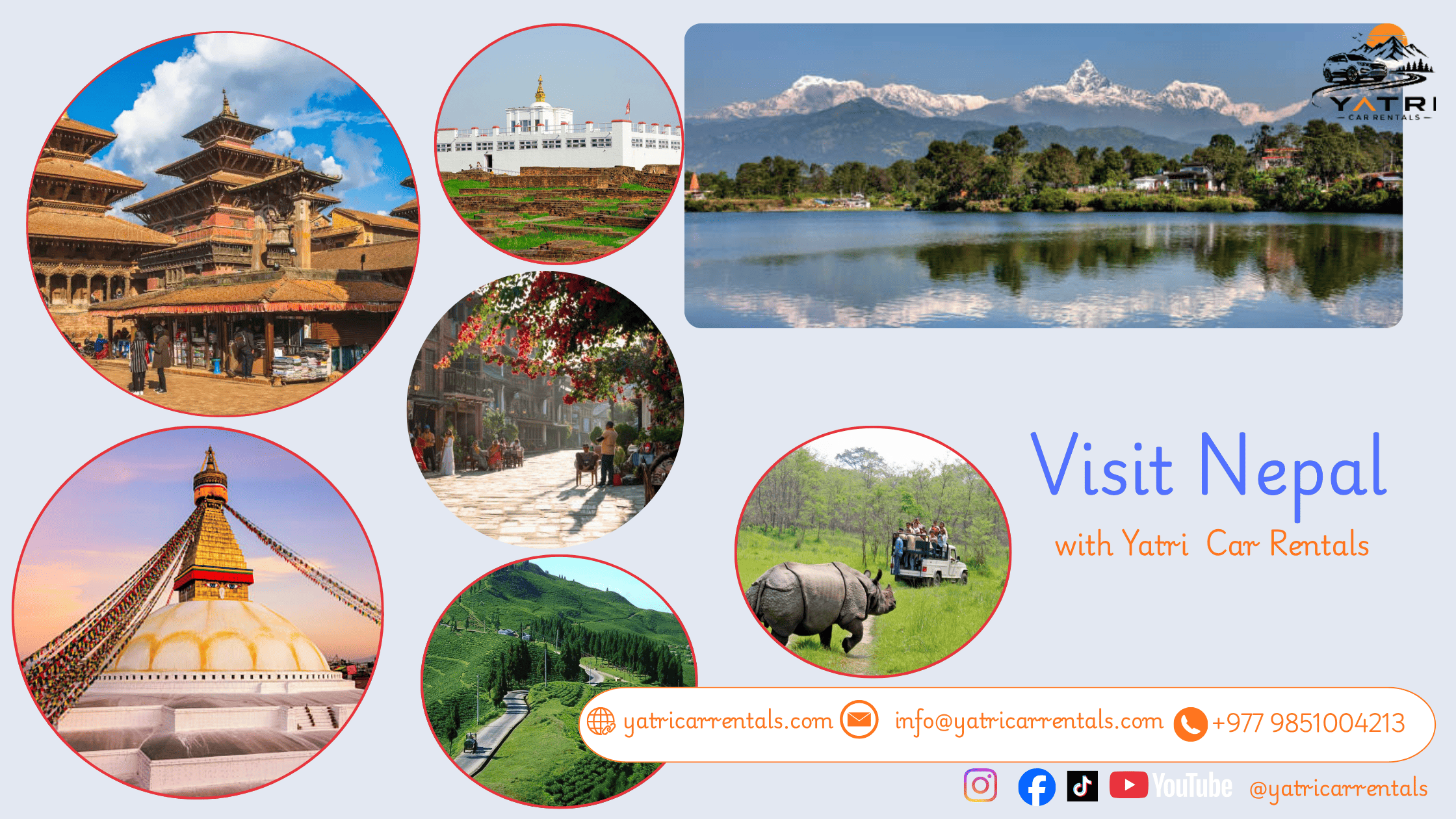
Bhaktapur Durbar Square sits furthest out — about 13 kilometers east of central Kathmandu — and rewards the extra distance. It's the best-preserved of the three medieval city centers, largely because Bhaktapur restricts vehicle traffic through its old town. Foreign entry runs roughly NPR 1,800 (about USD 15), noticeably higher than the other two, with SAARC nationals paying around NPR 500; this covers the 55-Window Palace, the Nyatapola Temple — one of the tallest pagodas in Nepal — and the pottery and Taumadhi squares nearby. Many visitors combine Bhaktapur with a stop at Nagarkot for mountain views on the way back, which is exactly the pairing our Bhaktapur, Nagarkot Tour Service is built around.
Swayambhunath and Boudhanath are both stupas, both UNESCO-listed, and both genuinely worth visiting — they're just not interchangeable. One is a viewpoint you climb to; the other is a community you walk into.
Swayambhunath, known locally and to most visitors as the Monkey Temple, sits on a hilltop reached by 365 stone steps. The white dome and gold spire are visible across much of the valley, and the painted eyes on the stupa's spire — watching in all four directions — are one of the most recognized images associated with Kathmandu. Whatever your own beliefs, the symbolism itself is worth sitting with for a moment: eyes that see in every direction at once, positioned above a city, are a fairly direct visual argument for the idea that wisdom isn't a single viewpoint but an awareness of all of them simultaneously. Foreign entry is NPR 200 and SAARC nationals pay around NPR 50 — one of the better-value tickets in the valley either way — and the site is generally open from sunrise to sunset, with early morning offering the fewest crowds and the clearest light for photos.
Boudhanath, by contrast, sits at valley level and functions less like a monument and more like a neighborhood built around one. It's one of the largest stupas in the world, and since the mid-20th century it's become a center of Tibetan Buddhist life in Nepal, with monasteries, monks, and prayer-wheel-lined shopfronts encircling the dome. The practice you'll see almost constantly here — walking clockwise around the stupa, spinning the prayer wheels as you pass — is a form of meditation built into motion rather than stillness, and watching it in practice tells you more about the philosophy behind it than any placard could. Foreign entry is NPR 400, SAARC nationals pay around NPR 100, and unlike most sites on this list, Boudhanath is open 24 hours, though daylight hours are when the square is genuinely alive.
Pashupatinath is Nepal's most important Hindu temple complex, dedicated to Shiva, and it's also the place on this list most visitors describe differently after seeing it than before. Non-Hindus cannot enter the inner sanctum — that restriction is firm and worth knowing before you go, so you arrive with the right expectations. What you can see, from the outer complex and across the Bagmati River, are the cremation ghats: open-air rites conducted in public view, not hidden from visitors but not staged for them either.
It's easy to describe this as simply "religious," but that undersells what's actually happening. The ghats put death in full daylight, in a way most modern cities go out of their way to avoid — and standing at the riverbank watching a rite in progress tends to prompt a fairly universal, non-denominational thought: that time is short and visible, not abstract. You don't need to share the temple's theology to find that worth sitting with for a few minutes. Pricing here breaks differently from every other site on this list: Nepali and Indian nationals enter free, a status tied to the two countries' long-standing open-border relationship, while all other SAARC nationals and foreign visitors, including Chinese nationals, pay NPR 1,000. The complex is open long hours, roughly 4:00 AM to 9:00 PM, which is why dawn visits — before the crowds and in cooler air — are the local recommendation, sunrise pujas included. If a guided visit that explains the rituals rather than just walking past them interests you, our Pashupatinath Temple Darsan with Rudravishek service is built specifically for that.
If Kathmandu Durbar Square is the valley's most visited site, Changu Narayan is close to its least — and that's precisely the appeal for travelers who've already done the main circuit. Perched on a hilltop near Bhaktapur, it's the oldest Hindu temple still in active use in the Kathmandu Valley, with stone inscriptions dating to the 5th century and dedicated to Vishnu. The carvings here — griffins, winged lions, ten avatars of Vishnu worked into the roof struts — are considered some of the finest stone and woodwork in the valley, without the crowds you'll find at the bigger squares. Foreign entry runs around NPR 350, SAARC nationals pay around NPR 150, and the temple is open roughly 6:00 AM to 7:00 PM. Most visitors pair it with Bhaktapur, since it's a short drive north of the old city.
Not every stop on a sightseeing day needs to be a monument. The Garden of Dreams, a restored neo-classical garden tucked at the edge of Thamel, is where a lot of travelers end up on their second or third day once temple-hopping starts to blur together. Unlike the UNESCO sites above, it doesn't run a separate SAARC tier — the ticket is NPR 150 for Nepali citizens and NPR 400 for every non-Nepali visitor, open 9:00 AM to 10:00 PM, and what you're paying for is simply quiet — six pavilions, fountains, and lawns a two-minute walk from the noise of Thamel's main streets.
Thamel itself isn't a monument at all, but it's where most visitors are based, and it's worth understanding as a place in its own right: Kathmandu's tourist and backpacker hub since the 1960s, dense with gear shops, bookstores, rooftop restaurants, and the city's most concentrated nightlife. It's less a sightseeing stop than the base camp everything else on this list radiates out from.
Every place on this list is reachable by taxi or on foot individually — the actual difficulty is sequencing them well, so you're not backtracking across the city or arriving at Pashupatinath at midday when the morning would have been better. That's the part a local driver solves that a map doesn't.
Yatri Car Rentals runs dedicated services for exactly this: the Pashupatinath Temple Darsan with Rudravishek for a guided, ritual-explained visit; the Bhaktapur, Nagarkot Tour Service and standalone Nagarkot By Car for the out-of-valley combination; and a general Kathmandu Day Tour chauffeur service for travelers who want the Durbar Squares, stupas, and Pashupatinath sequenced properly across one or two days without managing taxis between each stop. For groups arriving straight from the airport, Airport Transfer Service connects directly into any of these.
As with every Yatri Car Rentals package, fuel, driver fees, and any applicable entry coordination are included in the quoted price — not a penny extra once you've booked, with no upfront payment required and free cancellation if your plans change. You can see the full range of city and valley services on our services page, browse the vehicle fleet if you'd rather self-drive or bring a larger group, or get in touch directly to build a custom day plan around the sites that matter most to you.
Ready to see the Kathmandu Valley properly sequenced instead of pieced together? Book a Kathmandu Day Tour with Yatri Car Rentals and let a local driver handle the route — fuel, driver fees, and coordination included, not a penny extra once you've booked. Browse all our services, check tour packages for multi-day valley itineraries, or get in touch with any questions.
Author: Yatri Car Rentals
Rent sedan cars, 4WD Scorpio SUVs, HiAce vans & tourist buses with experienced drivers across Nepal.